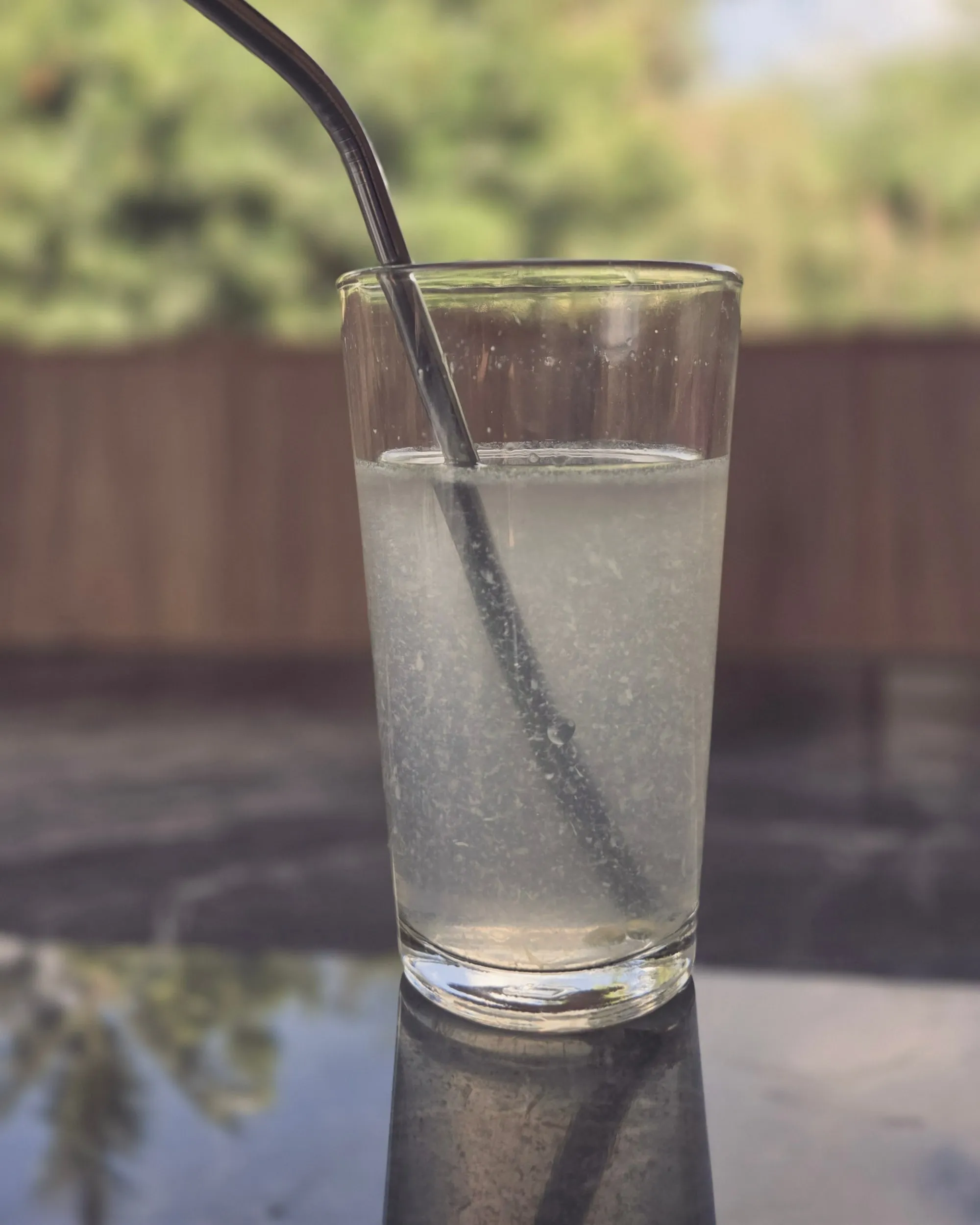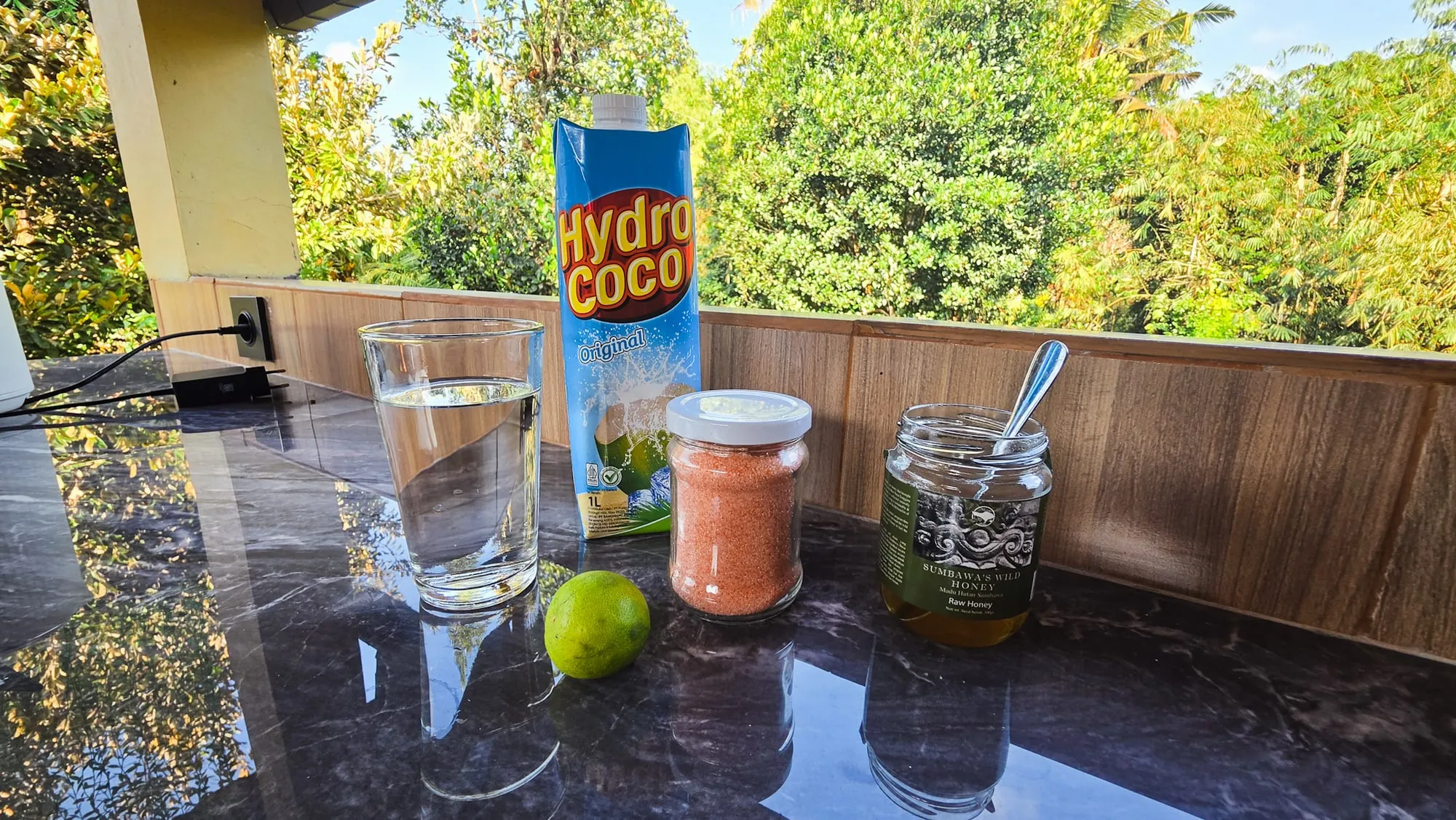
Electrolytes have become an expensive industry. Colourful sachets, subscriptions, influencers with discount codes. But what is inside them may already be in your cupboard.
I have to start by contradicting myself a little: I fell for the Himalayan salt trend myself, and that is what sits in my cupboard 🤭 It turns out the cheapest option is actually the best.
Below you will find why each ingredient is there, and what you get from it.
About the Himalayan salt
The pink salt is sold on its “84 minerals”.
Those minerals are real. But an Australian analysis of 31 pink salt samples, published in Foods in 2020, worked out how much you would have to eat to get a biologically meaningful amount of them. The answer was around 30 grams of salt a day — six teaspoons. That is six times what the World Health Organization sets as the upper limit for salt altogether.
So the trace minerals exist, but not in quantities that reach you.
What actually works is the sodium. And sodium is sodium, whether it comes from a pink crystal from Punjab or the box on your kitchen counter.
Which makes the point better, really: the trick is cheaper than you thought. Use the salt you have. If you like the pink one because it is pretty and tastes a little different, use it — just do not pay extra for the minerals.
Why there has to be a little honey or sugar in it
This is the part I find lovely.
The sweetness is not for taste. Sodium is absorbed in the gut by a transporter called SGLT1, and it carries one sodium and one glucose molecule at the same time — they go together or not at all. Without a little of something sweet, much of the salt simply passes through.
That is the whole discovery behind rehydration solution. And you do not need much: roughly as many glucose molecules as sodium. A teaspoon of honey is plenty.
So yes — water with only salt in it goes in less well than water with salt and a little honey or sugar.
Why coconut water or juice
Sweat contains around 900–1200 mg of sodium per litre, but also 150–300 mg of potassium. Salt gives you the first and none of the second.
That is what the 100 ml of coconut water or orange juice is doing there. It brings about 200–250 mg of potassium, a little glucose along with it, and makes the whole thing taste like something you actually want.
What you get
| Sodium | 300 mg |
|---|---|
| Potassium | 250 mg |
| Sugar | 8–10 g |
| Energy | about 50 kcal |
The numbers shift with what you put in, the coconut water especially — some cartons have added sugar. But the order of magnitude holds, and it suits a hot day, a long walk or the morning after.
If you have really been sweating, double the salt. If you are just sitting in the shade knitting, you do not need it at all — water is fine.
The arithmetic
A pinch of salt is about 0.75 grams. A one-kilo bag of salt will therefore make over a thousand half-litres.
The rest costs you a teaspoon of honey and half a lime.
If you are actually ill
Then this is a different recipe. The World Health Organization’s rehydration solution is far stronger: 2.6 g salt, 13.5 g glucose, 1.5 g potassium chloride and 2.9 g trisodium citrate per litre of water.
That is not something to guess at in your kitchen, least of all for a child. Buy the sachets from a pharmacy. The mix above is for ordinary days, not for illness.